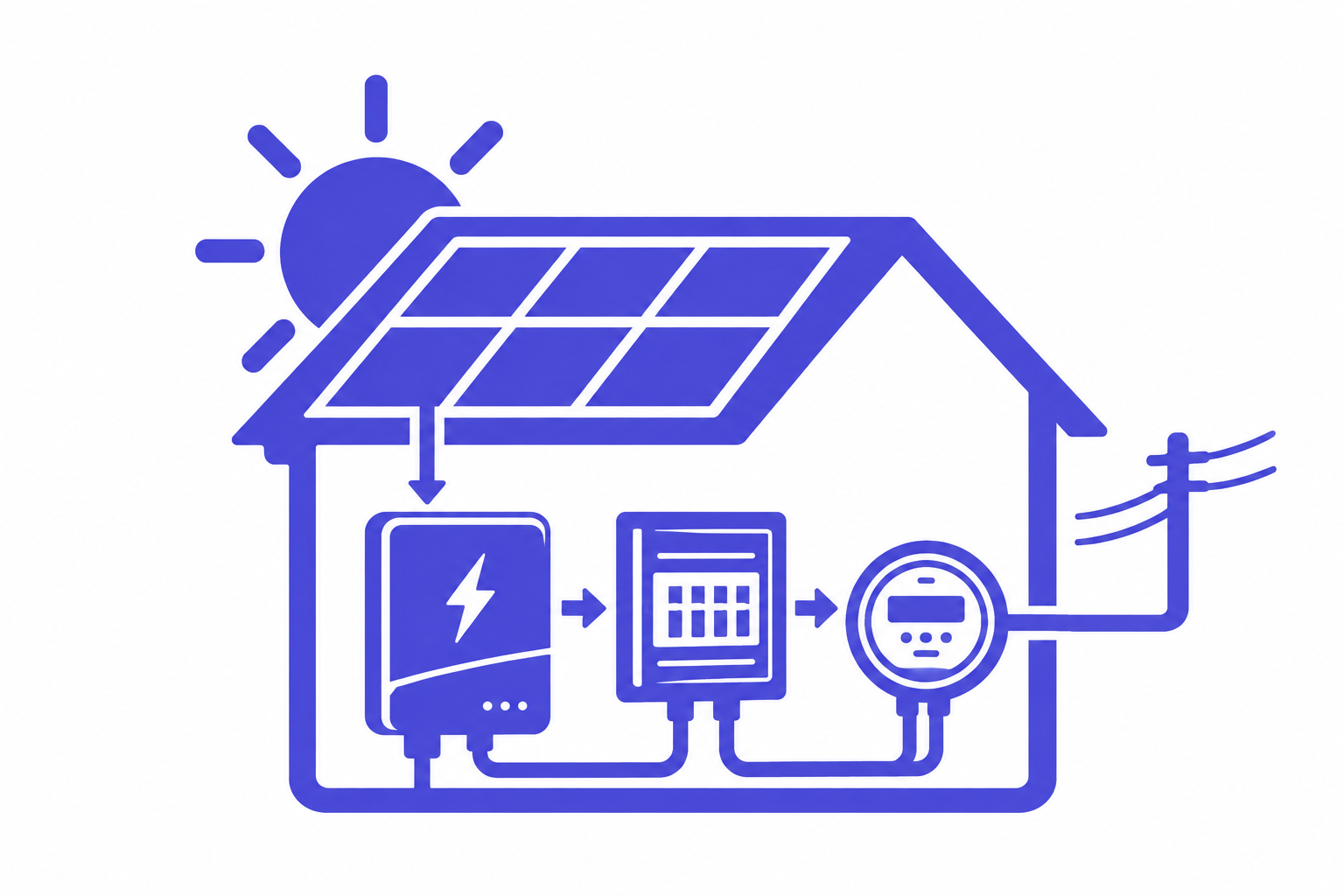
Garage walls and dedicated utility rooms are the most common choices because they shorten conduit runs and keep equipment accessible for service. Attics rarely work due to heat limits. Exterior-rated alcoves appear in warmer climates where indoor space is tight.
Contact Us
Write to us about inverter wall options, attic conduit routing, panel board space, meter appointment timing, or utility paperwork. We reply with reference material and reminders about licensed electrical scope.
Send a Message
Common Questions
Short answers about indoor solar electrical work. Licensed electricians handle live wiring and final approvals.
Conductors typically enter through a roof penetration into the attic, then follow a protected chase down an interior or exterior wall toward the inverter and main panel. Framing members, fire blocking, and existing plumbing often force route changes that are not visible until walls or ceilings open.
A licensed electrician evaluates available breaker spaces and bus bar capacity. Common updates include a dedicated solar breaker, labeling for disconnect points, or a subpanel near the inverter when the main enclosure runs out of room. Line-side taps are utility-specific and not universal.
Meter swaps usually follow a passed electrical inspection and approved interconnection paperwork. The appointment is scheduled by the utility, not the roof crew. Some providers install a new bidirectional socket; others reprogram the existing meter after a brief outage.
Disconnect day gives the electrician a de-energized window to pull the meter, tie in new conductors, and verify isolation before re-energizing. Plan for refrigeration, medical devices, and remote work uptime because the outage often lasts several hours even when the meter swap itself is short.
No. VoltPath publishes reference material and responds to messages with guides and checklists. We do not pull meters, modify panel boards, or dispatch installers. Any work inside the electrical panel or at the meter requires a licensed electrician in your jurisdiction.
You can photograph the open panel door from a safe distance if an electrician already removed the cover during a site visit. Do not remove dead fronts, touch bus bars, or test breakers without proper training and licensing. Empty slot counts are easy to misread without knowing bus bar limits.
Our Austin Office
Editorial and support operations for VoltPath are based at the address below.
Important Information
VoltPath publishes reference material about residential solar electrical connections. Contact form messages receive informational replies with guides and checklists—not on-site work or professional electrical advice. Always confirm details with a licensed electrician, utility engineer, or local building official.
VoltPath is not a solar installation company. We do not mount panels, schedule roof work, or perform electrical connections. We do not sell solar panels, inverters, batteries, or related hardware, and we do not compare equipment brands or models.
Utility interconnection rules, net metering policies, and program eligibility vary by location and change over time. Confirm current requirements with your state energy office and local utility provider before making project decisions.
Grid interconnection, work inside the electrical panel board, and structural assessment of roof loading capacity require licensed specialists. Any decisions you make based on our guides—including equipment sizing and contractor selection—are your responsibility.
Every home has a different wiring layout. Copying another homeowner's conduit route or breaker configuration without a site-specific evaluation can create safety hazards and code violations.