When the Utility Meter Gets Replaced During a Solar Install
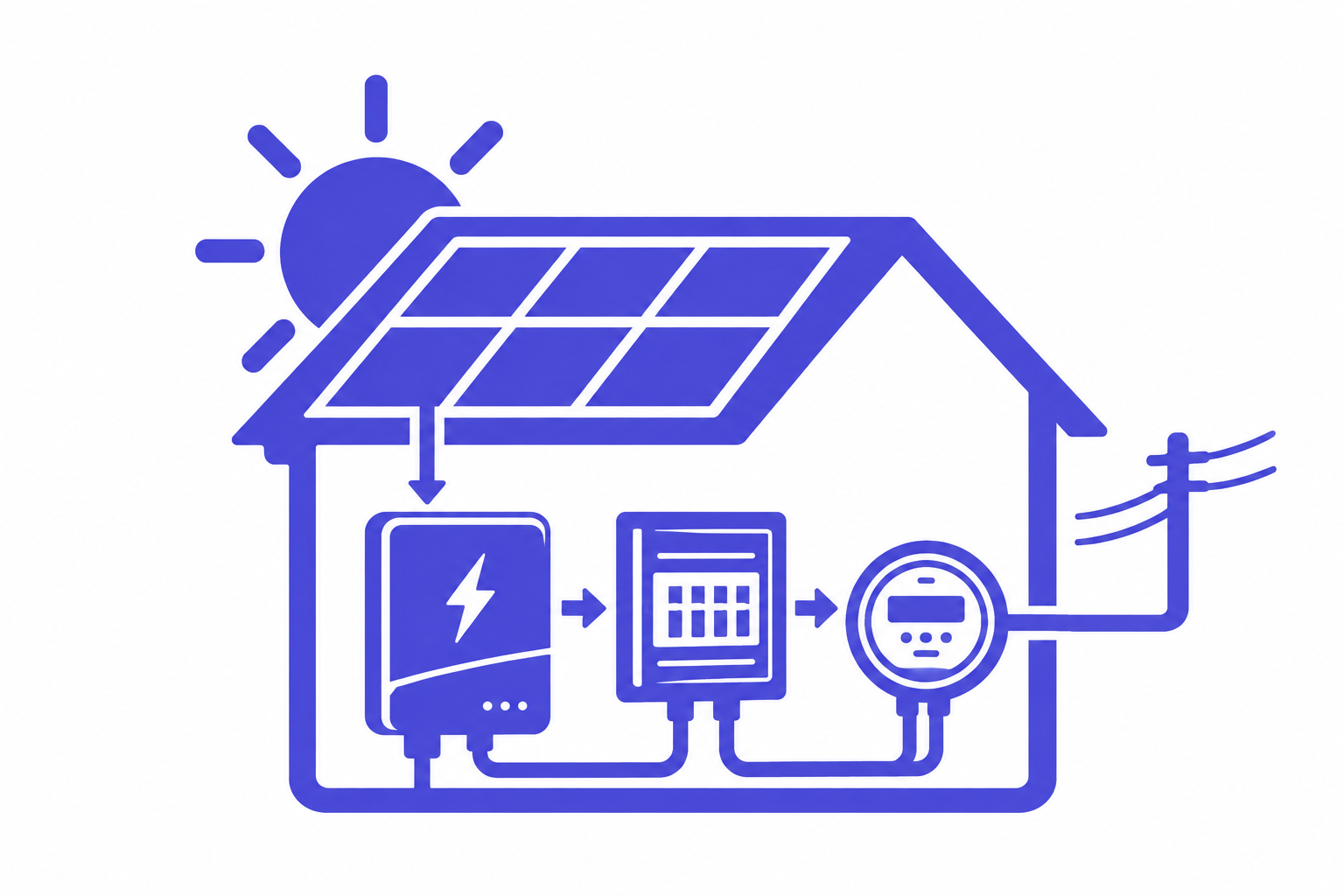
A couple in suburban Phoenix watched their inverter display production for ten days while the old mechanical meter still spun forward only. The installer had finished roof and panel work, but the utility had not yet swapped in a bidirectional meter—and without that swap, exported kilowatt-hours never registered on the account.
Why Meter Work Sits on a Different Calendar
Roof crews and electricians operate on construction schedules tied to permits and weather. Utility meter shops operate on interconnection queues, fleet routing, and billing-system updates. The two timelines overlap only at the end, which is why homeowners often see a fully wired system producing power before the meter socket changes.
Most utilities treat the meter as their asset. Even when a homeowner owns the solar array, the socket, seal ring, and meter form belong to the grid operator. That ownership line means your electrician can prepare conductors and labeling, but only a utility technician or authorized agent typically installs the new register.
What Usually Has to Happen First
Before a swap appointment appears on the portal, several gates tend to close in sequence. Missing any one of them pushes the date out without much visibility from the customer side.
- passed local electrical inspection with signed job card uploaded to the utility;
- completed interconnection application with one-line diagram matching as-built wiring;
- witness test or remote verification that export limits and disconnect switches work;
- account standing clear of unrelated service orders that block field visits.
Rural cooperatives sometimes move faster because a single office handles inspection review and scheduling. Large investor-owned utilities may batch meter orders regionally, so two neighbors who passed inspection the same week still receive swaps weeks apart.
Production on the inverter app and updates in the utility billing portal are two different clocks. Until the new meter is sealed and activated in the billing system, only one of them is telling the full story.
Types of Meter Changes You Might See
Not every solar home receives the same hardware. Legacy electromechanical meters lack the registers needed to measure export accurately. Utilities replace them with solid-state bidirectional units that record delivered and received energy separately.
Socket-only upgrades
Older meter bases with damaged jaws or rusted rings may need replacement before a new register will fit. That adds a second truck roll and sometimes trench work if the service entrance cable is too short to allow a taller socket.
Communications modules
Some territories install meters with built-in radios for remote reading. Activation in the billing system can lag the physical install by a day or two, during which production still does not appear on the online portal even though the dial shows bidirectional flow.
The Visit Itself
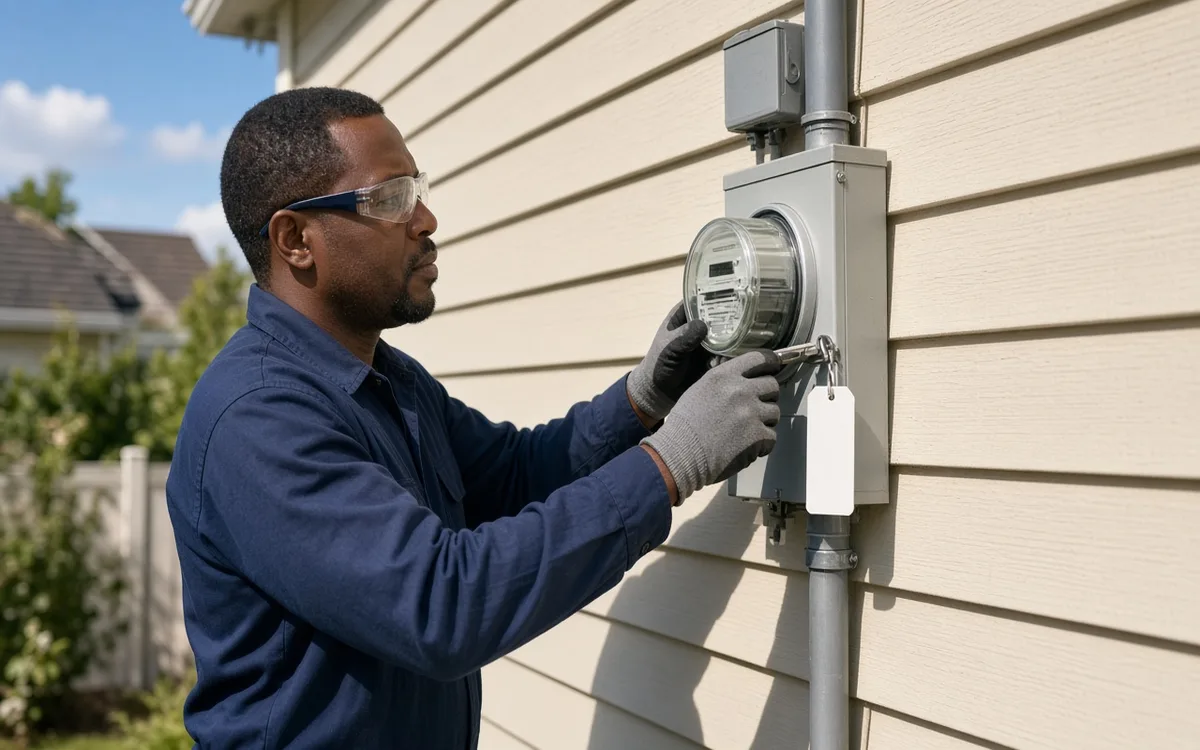
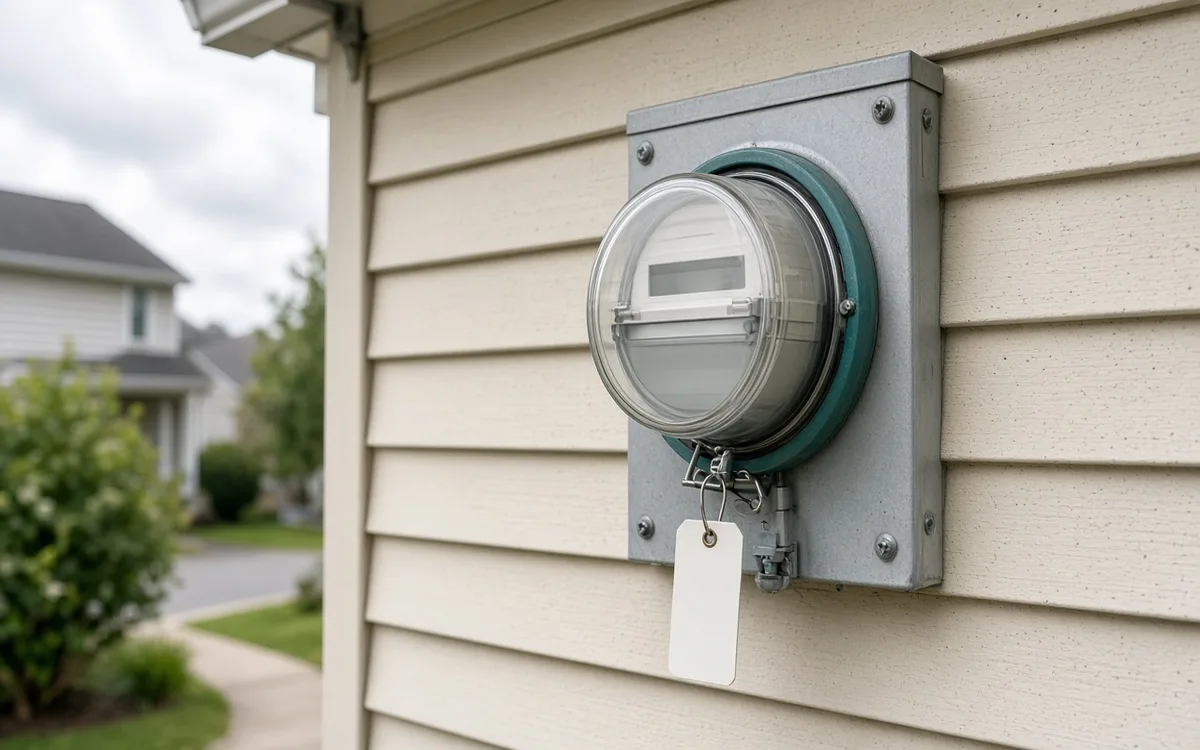
Meter replacement is usually shorter than a full grid disconnect day, but power still drops while the old unit is pulled. Technicians verify phasing, reseal the ring, and leave a tag showing the visit time. Homeowners should expect brief outage—not always announced down to the minute—and keep garage doors, alarm panels, and network gear on the same backup plan used for other service work.
A typical field sequence looks like this:
- notify the account holder or leave a door hanger if nobody answers;
- de-energize the service at the meter or upstream disconnect;
- remove the old register and inspect the socket for heat damage;
- install and program the new meter to the account number on file;
- restore power, verify rotation or register direction, and apply a fresh seal.
If the technician finds a open neutral or overheated lug, the swap stops until a licensed electrician repairs the service entrance. That surprise is uncommon but more complex when it appears, because it splits responsibility between utility field staff and the customer's electrician mid-process.
After the Swap: What Still Might Wait
Physical installation does not always equal immediate utility enrollment. Billing departments may need a tariff rider applied, a time-of-use rate selected, or a permission-to-operate letter emailed before export readings appear in billing. Homeowners who monitor only the inverter app can miss that backend step until the first post-solar statement shows unexpected line items.
Keep copies of every signed interconnection document and photograph the new meter label showing the utility serial number. If production and billing disagree a month later, those records shorten the call with customer service more than a screen capture of inverter output alone.
How to Reduce the Gap
Ask your installer which inspection uploads trigger utility review in your territory—not all AHJs send paperwork automatically. Confirm whether your utility requires you to schedule the meter appointment or whether it auto-generates after PTO approval. If the portal shows a pending status with no date, call before assuming silence means approval.
Treat meter swap timing as a planning variable separate from roof completion. Freezers, medical devices, and home offices need the same outage checklist used on disconnect day, even when the utility estimates a short visit. The hardware change is small; the coordination around it rarely is.